

From $7,100 production costs down to nearly nothing — how Chinese musicians are embracing AI tools while the industry grapples with copyright questions
In a sound mixing room at the China Musical Techno Base in Hangzhou, musician Ma Zhiyong fine-tunes melodies using AI algorithms to add theatrical vocal qualities to his tracks. It’s a scene playing out across China’s music industry, where artificial intelligence has moved from experimental novelty to dominant production method in less than two years.
The numbers tell the story: AI-generated works accounted for 56.9% of independently released new songs in China during the first quarter of 2025, according to industry statistics. That’s a seismic shift in how music gets made — and it’s happening faster in China than anywhere else in the world.
The economics are transforming
“In the past, producing a single song cost at least 30,000 yuan to 50,000 yuan ($4,300 to $7,100),” Ma said. “Now, with AI assistance, costs have dropped significantly.”
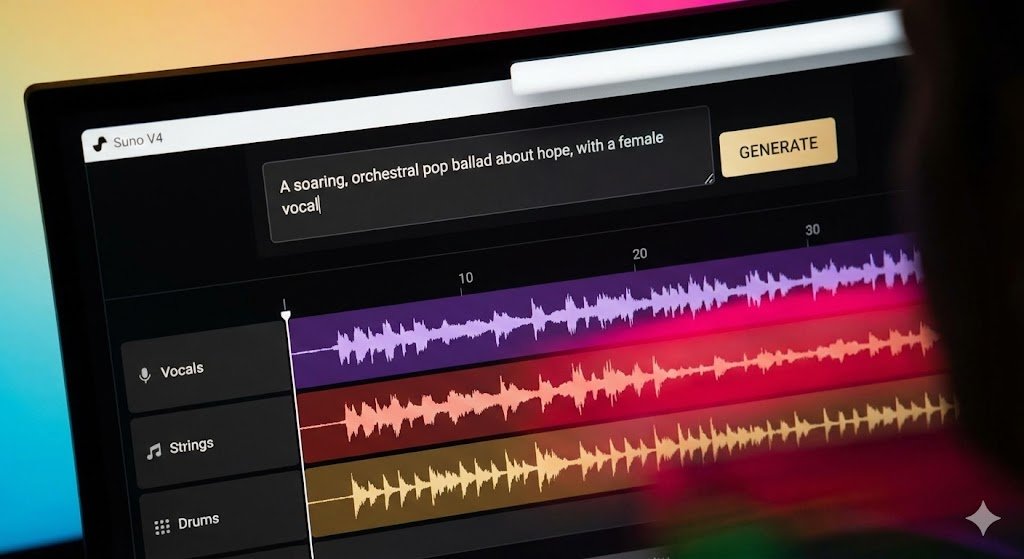
In February, the China Musical Techno Base integrated DeepSeek’s large language models with the music generation tool Suno V4, dramatically boosting creation efficiency. Staff can now complete the entire production process — from lyrics and composition to arrangement and vocals — simply by inputting text prompts.
“With the popularization of AI tools, our staff can now complete everything with just text input,” Ma explained. “In my view, AI is not meant to replace musical artistry. It’s opening up infinite possibilities for music.”
The China Musical Techno Base alone has generated cumulative operating revenue of 65.6 billion yuan ($9.3 billion) over the past five years, powered primarily by AI technology.
Mass adoption across platforms
At the 2025 World Internet Conference in Wuzhen, Tencent Music Entertainment Group (TME) showcased its AI song creation system, demonstrating how accessible music production has become. The platform uses image recognition and deep learning algorithms to simulate professional musicians’ creative processes.
“Users simply upload a picture or select a style through conversation, and within three to five minutes, a complete song with a full structure is generated,” said Wu Bin, senior director of TME’s Lyra Lab.
To date, over 10 million users have utilized TME’s AI music tools, generating more than 26 million tracks. Many have gained widespread circulation, accumulating over 1 billion plays collectively.
NetEase Cloud Music’s AI creation platform, NetEase Tianyin, has cumulatively produced more than 40,000 original music pieces.
Beyond creation: Personalized listening
AI’s impact extends beyond production into consumption. TME has integrated DeepSeek’s large language models into QQ Music’s AI assistant, enhancing music discovery and recommendations.
The platform analyzes both audio and text elements of songs in users’ playlists, extracting characteristics to recommend music matching their moods and tastes with unprecedented precision.
In August, QQ Music launched a campaign for its 20th anniversary using AI to trace users’ song collection data over two decades. By combining listening duration, style preferences, and emotional tags, the platform enabled each user to generate a personalized song — turning listening history into original music.
Education adapts
The transformation is reshaping music education. Since 2019, institutions including the Central Conservatory of Music, Shanghai Conservatory of Music, and Sichuan Conservatory of Music have established programs in music and AI, creating new interdisciplinary fields.
“The widespread application of AI technology in music creation, production, distribution and consumption has not only enriched musical forms and content but also introduced new business models and growth drivers for the industry,” said Huang Zongquan, a professor at the Central Conservatory of Music.
The copyright question
Yet as AI-generated music becomes the majority of new releases, fundamental questions about ownership and compensation remain unresolved. Experts are calling on authorities to issue guidance clarifying copyright ownership, usage norms, and profit distribution mechanisms to protect creators’ rights.
“Relevant authorities should establish technical standards and evaluation systems to regulate data use and reduce security and ethical risks, ensuring the healthy and orderly development of the music industry,” industry observers recommend.
The concerns aren’t hypothetical. When more than half of new music is AI-generated, traditional musicians face direct competition from tools that can produce complete tracks in minutes at near-zero marginal cost. The question of whether AI-generated music should receive the same copyright protections as human-created work — and who owns those rights when models are trained on existing catalogs — has massive implications for the industry’s economics.
Why it matters
China’s embrace of AI music tools is happening at a scale and speed unmatched globally. The 57% figure for AI-generated new releases in Q1 2025 represents a tipping point where AI-produced music has become the norm rather than the exception.
This creates a natural experiment in what happens when AI fundamentally disrupts creative industries. Will production costs dropping to near-zero democratize music creation, or flood the market with low-quality content? Will human musicians find new roles as creative directors guiding AI tools, or get displaced entirely? Will listeners care about the distinction between human and AI-generated music, or simply consume whatever the algorithms recommend?
The answers emerging from China’s music industry over the next few years will likely preview what happens in other creative sectors and other markets as AI generation tools mature. For now, Chinese musicians like Ma Zhiyong are betting that AI opens possibilities rather than closing them — while preparing for an industry that looks fundamentally different than it did just two years ago.
As Dai Qionghai, chairman of the Chinese Association for Artificial Intelligence, noted: “The integration of music and technology is an inevitable trend with broad social significance and strong practical value for innovation in the music industry.”
Whether that innovation ultimately benefits human musicians or merely accelerates their replacement remains the industry’s defining question.
