

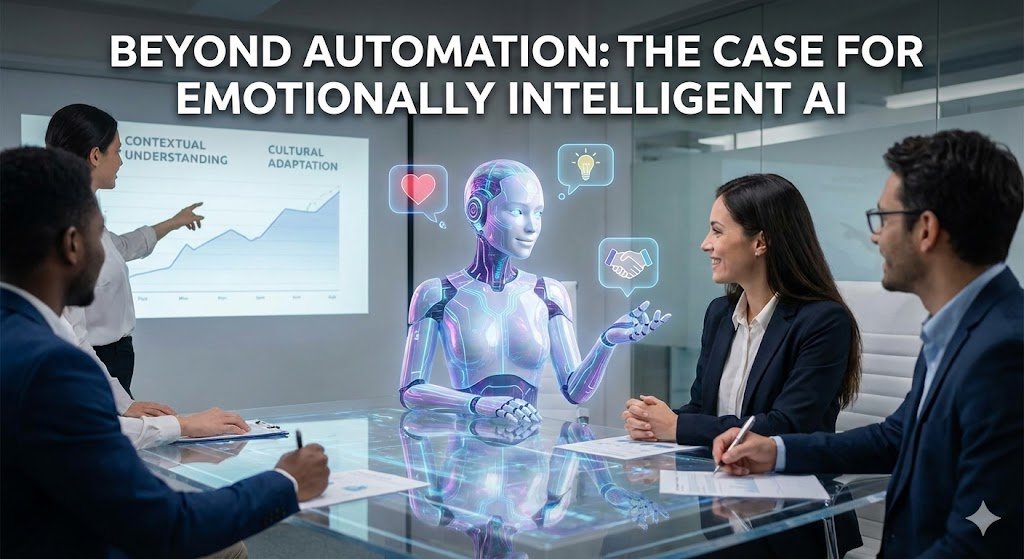
The narrative around workplace AI has undergone a significant evolution. While early deployments focused primarily on task automation and operational efficiency, we’re now witnessing a more nuanced conversation about AI systems that can understand context, recognize emotional cues, and adapt to cultural differences. This shift from “AI as replacement” to “AI as collaborative partner” represents both a technical challenge and an opportunity to reimagine how intelligent systems can augment human capability in domains requiring judgment, empathy, and cultural awareness.
The Technical Foundations of “AI Twins”
The concept of an “AI twin”—a personalized digital counterpart that learns individual working patterns and provides contextualized support—is built on several converging technical capabilities that have matured in recent years. At the foundation are large language models with increasingly sophisticated reasoning abilities, combined with retrieval-augmented generation systems that can surface relevant information from organizational knowledge bases in real time.
What makes these systems potentially valuable in human-centered roles is their ability to process multimodal signals. In a customer service context, for example, modern AI systems can analyze:
- Linguistic patterns: word choice, sentence structure, and semantic content
- Paralinguistic features: tone, pitch, speech rate, and acoustic markers of emotional state
- Temporal dynamics: response latency, turn-taking patterns, and conversational flow
- Contextual information: customer history, product details, and organizational policies
By integrating these signals, AI systems can provide real-time decision support that goes beyond simple information retrieval. Detecting rising frustration in a customer’s voice and suggesting empathetic language represents a meaningful application of affective computing—but it also highlights the technical and ethical complexities inherent in this space.
The Challenge of Emotional Recognition Across Cultures
One of the most significant technical challenges in building emotionally intelligent AI systems is the profound variation in how emotions are expressed and interpreted across cultures. Research in cross-cultural psychology has consistently demonstrated that emotional expression, display rules, and communication norms vary substantially across cultural contexts.
Consider the seemingly straightforward task of detecting frustration. The acoustic markers, word choices, and conversational patterns associated with frustration in one cultural context may not translate directly to another. Silence, for instance, can signal contemplation in some cultures but discomfort or disagreement in others. Directness in speech may be valued as honesty in certain contexts but perceived as rudeness in others.
This variability poses a fundamental challenge for AI systems trained primarily on datasets from specific geographic or cultural contexts. A model trained predominantly on English-language customer service interactions from North America may fail to recognize or appropriately respond to emotional cues in Arabic-language interactions in the Gulf region, not because of language barriers per se, but because of deeper differences in conversational structure, politeness conventions, and emotional expression.
Addressing this requires:
- Diverse, representative training data that captures the full range of cultural variation in emotional expression
- Culturally-aware model architectures that can adapt their interpretations based on contextual cues about cultural background
- Continuous learning mechanisms that allow systems to refine their understanding based on feedback from diverse user populations
- Human-in-the-loop validation to catch cases where automated systems misinterpret cultural signals
The Amplification Problem: When Bias Meets Scale
The article correctly identifies a critical concern: AI systems are not neutral, and unchecked biases can be amplified at scale. This is particularly salient in workplace applications where AI might influence hiring decisions, performance evaluations, or customer interactions.
The technical challenge here is multifaceted. Bias can enter AI systems through:
- Training data: Historical patterns in data may reflect past discrimination or imbalanced representation
- Feature selection: The choice of which signals to include or exclude can inadvertently encode bias
- Optimization objectives: What we choose to optimize for (efficiency, consistency, etc.) may not align with fairness or equity
- Deployment context: Even a well-designed model can produce biased outcomes if deployed in contexts with structural inequalities
From a research perspective, addressing these issues requires ongoing work in several areas:
Fairness metrics and evaluation frameworks: We need robust methods for measuring bias across different demographic groups and cultural contexts, recognizing that “fairness” itself is not a monolithic concept but involves trade-offs between different mathematical definitions.
Adversarial testing: Systematically probing systems for failure modes, edge cases, and situations where they might produce discriminatory outcomes.
Transparent decision-making: Developing interpretable models or explanation systems that allow human users to understand why an AI system made a particular recommendation.
Governance structures: Technical solutions alone are insufficient. Organizations deploying these systems need clear policies about acceptable use, regular audits, and accountability mechanisms when things go wrong.
Beyond Task Performance: AI for Human Flourishing
One of the more promising directions discussed in the article is the shift from using AI purely for efficiency gains to leveraging it for employee wellbeing, personalized learning, and workplace inclusion. This represents a fundamentally different design philosophy—one that measures success not just in productivity metrics but in human outcomes.
From a technical standpoint, this requires building systems that can:
- Recognize patterns of burnout or disengagement from behavioral signals, while respecting privacy boundaries
- Adapt learning experiences to individual needs, prior knowledge, and learning styles
- Identify and surface opportunities for skill development that align with both organizational needs and individual career aspirations
- Monitor for signs of workplace inequity such as systematically different evaluation standards or access to opportunities across demographic groups
These applications push AI systems beyond narrow task optimization toward a more holistic understanding of workplace dynamics. They also raise important questions about surveillance, privacy, and the appropriate boundaries of AI monitoring in professional contexts.
The Research Agenda Ahead
Building AI systems that genuinely enhance human capability in emotionally and culturally complex domains requires sustained research attention across multiple fronts:
Affective computing: Improving our ability to recognize and respond to emotional states while accounting for individual and cultural variation.
Personalization at scale: Developing systems that can adapt to individual users without requiring massive amounts of personal data or creating filter bubbles.
Cultural intelligence: Building models that can recognize and appropriately respond to cultural context, potentially through multi-task learning that explicitly incorporates cultural background as a relevant variable.
Interpretability and trust: Creating systems whose reasoning processes are transparent enough that users can develop appropriate mental models of when to trust AI recommendations and when to override them.
Longitudinal evaluation: Moving beyond snapshot performance metrics to understand how AI-human collaboration evolves over time and whether it genuinely improves outcomes that matter for human flourishing.
A Measured Perspective
While the vision of emotionally intelligent AI partners in the workplace is compelling, we should maintain realistic expectations about current capabilities and near-term possibilities. Today’s AI systems, despite impressive advances, have significant limitations in:
- Genuine emotional understanding (as opposed to pattern recognition)
- Causal reasoning about social dynamics
- Adapting to truly novel situations or cultural contexts not represented in training data
- Understanding the broader organizational or social context in which they operate
The most successful deployments will likely be those that position AI as a tool that augments human judgment rather than replacing it—providing relevant information, flagging potential issues, and offering suggestions, while keeping humans firmly in the decision-making loop for consequential choices.
As researchers and practitioners, our responsibility is to continue advancing the technical capabilities that enable more sophisticated human-AI collaboration, while simultaneously developing the governance frameworks, evaluation methods, and ethical guidelines that ensure these systems are deployed responsibly and equitably. The future of work may indeed involve AI partners, but building systems worthy of that partnership requires both technical innovation and sustained attention to the human and cultural dimensions of workplace interaction.
